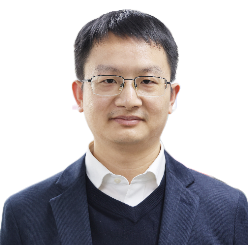
PI
Research Group
Zihou Deng
zdeng(at)cimrbj.ac.cn
Assistant Investigator

Tumor Immunology, Macrophages, Genetic Diseases,

Chronic Diseases

Scan to Learn More
Scan to Learn More
B.S. in Life Science, Central China Normal University, China
Ph.D. in Microbiology, Institut Pasteur of Shanghai, Chinese Academy of Sciences, China
Work Experience
2024.6-Present
Assistant Investigator, Chinese Institute for Cancer Research, Chinese Institutes for Medical Research, Beijing, China
2021.9-2024.5
Senior Research Scientist, Memorial Sloan Kettering Cancer Center, USA
2016.8-2021.8
Research Scholar, Memorial Sloan Kettering Cancer Center, USA
Honors and Awards
2021
Ludwig Center Basic and Translational Immunology Postdoctoral Fellowship, USA
2016
CRI Irvington Postdoctoral Fellowship, USA
2015
The President's Award, Chinese Academy of Sciences, China
2015
Ray Wu Prize
Research Interests
Research Interests

The Deng laboratory focused on the mechanistic understanding of immune regulation in diseases such as cancer, tissue damage, neurodegenerative diseases, and genetic diseases with a particular focus on macrophage biology in these contexts, to develop mechanism-based intervention approaches to improve disease treatment. The laboratory focuses on the following research directions:

Direction 1: Investigating the mechanisms of immune cells in tumor progression.We employ multi-omics approaches alongside genetic and cell biology tools to dissect the roles of immune cells in tumor initiation, progression, and metastasis. By identifying key molecular targets, we aim to develop novel immunotherapies for cancer treatment.


Direction 2: Investigating the molecular mechanisms of tumor immune evasion.We utilize genetic, cell biology, and biochemical approaches to elucidate how tumors evade immune surveillance. Through the identification of critical targets, we strive to develop innovative immunotherapies.


Direction 3: Investigating the mechanisms of macrophages in chronic diseases.We apply multi-omics approaches combined with genetic tools to uncover the roles of macrophages in chronic diseases such as liver cirrhosis. By pinpointing key targets, we seek to develop new therapeutic strategies grounded in these discoveries.


Major Contributions
1. Discovery of the critical roles of ID3 in endowing macrophages with anti-tumor activity (Nature, 2024).
2. Discovery of SHP-2 as a required factor for mediating C-type lectin receptor-induced activation of the kinase Syk and anti-fungal TH17 responses. (Nature Immunology, 2015).
Representative Publications     *:Co-first author; #:Co-corresponding author
Representative Publications *:Co-first author; #:Co-corresponding author
Aggarwal SS#, Andreani C#, Deng Z#,  Frede J#, Kameneva P#, Kovatcheva M#, Micevic G#, Nicolson F#, Puschhof J#, Roberts M#, Wang G#, Watson DC#The 2024 generationNature Cancer2024, 5: 1774–1778. DOI: 10.1038/s43018-024-00866-2.
Deng Z, Loyher PL, Lazarov T, Li L, Shen Z, Bhinder B, Yang H, Alberdi A, Massague J, Sun J, Benezra R, Glass CK, Elemento O, Iacobuzio-Donahue CA, Geissmann F#. The nuclear factor ID3 endows macrophages with a potent anti-tumor activity. Nature, 2024, 626: 864-873. DOI: 10.1038/s41586-023-06950-4
Deng Z, Ma S, Zhou H, Zang A, Fang Y, Li T, Shi H, Liu M, Du M, Taylor PR, Zhu HH, Chen J, Meng G, Li F, Chen C, Zhang Y, Jia XM, Lin X, Zhang X, Pearlman E, Li X, Feng GS, Xiao H#. Tyrosine phosphatase SHP-2 mediates C-type lectin receptor-induced activation of the kinase Syk and anti-fungal TH17 responses. Nature Immunology, 2015, 16: 642-652. DOI: 10.1038/ni.3155
Lazarov T*#, Loyher PL*, Yang H*, Choo ZN, Deng Z, Nowotschin S, Kuo YY, Zhou T, Alberdi A, Stumm R, Mass E, Gomez Perdiguero E, Hadjantonakis AK, Geissmann F#Identification of a mesodermal progenitor for the pro-definitive angio-hematopoietic lineage. bioRxiv, 2024, August 25. DOI: 10.1101/2024.08.24.609533
Sakai M*, Troutman T D*., Seidman J S*., Ouyang Z,. Spann NJ, AbeY, Ego KM, Bruni CM, Deng Z, Schlachetzki JCM, Nott A, Bennett H, Chang J, Vu BCT, Pasillas MP, Link VM, Texari L, Heinz S, Thompson BM, McDonald JG, Geissmann F, and Glass CK#. Liver-derived signals sequentially reprogram myeloid enhancers to initiate and maintain Kupffer cell identity. Immunity, 2019, 51: 655-670.e8. DOI: 10.1016/j.immuni.2019.09.002
Wang W, Deng Z, Wu H, Zhao Q, Li T, Zhu W, Wang X, Tang L, Wang C, Cui SZ, Xiao H#, Chen J#. A small secreted protein triggers a TLR2/4-dependent inflammatory response during invasive Candida albicans infection. Nature Communications, 2019, 10: 1015. DOI: 10.1038/s41467-019-08950-3
Loyher PL*, Hamon P*, Laviron M, Meghraoui-Kheddar A, Goncalves E, Deng Z, Torstensson S, Bercovici N, Baudesson de Chanville C, Combadière B, Geissmann F, Savina A, Combadière C, Boissonnas A#. Macrophages of distinct origins contribute to tumor development in the lung. Journal of Experimental Medicine, 2018, 215: 2536- 2553. DOI: 10.1084/jem.20180534
Ma S, Wan X, Deng Z, Shi L, Hao C, Zhou Z, Zhou C, Fang Y, Liu J, Yang J, Chen X, Li T, Zang A, Yin S, Li B, Plumas J, Chaperot L, Zhang X, Xu G, Jiang L, Shen N, Xiong S, Gao X, Zhang Y, Xiao H#. Epigenetic regulator CXXC5 recruits DNA demethylase Tet2 to regulate TLR7/9-elicited IFN response in pDCs. Journal of Experimental Medicine, 2017, 214: 1471-1491. DOI: 10.1084/jem.20161149
Full List of Publications Can Be Found Here