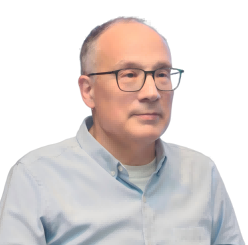
Bacterial Pathogenesis, Spread of Antibiotic Resistance Genes,
DNA Transport during Bacterial Conjugation,
Bacterial Secretion Systems, Structural and Mechanistic Biology
gabriel.waksman(at)cimrbj.ac.cn
B.S. in Genetics & Fundamental Biochemistry, University of Paris, France
M.S. in Genetics & Biochemistry, University of Paris, France
Ph.D. in Biochemistry, University of Paris, France
Work Experience
2026-Present
Distinguished Investigator and Director, Chinese Institute for Infectious Diseases, Chinese Institutes for Medical Research, Beijing, China
2001-Present
Professor of Structural and Molecular Biology, Birkbeck, University of London; Courtauld Professor of Biochemistry, University College London, UK
1993-2001
Assistant, Associate, Full, and Endowed Professor of Biochemistry, Washington University, USA
1991-1993
Postdoctoral Assistant, Rockefeller University, USA
1987-1991
Postdoctoral Assistant, University of Bristol and Sheffield, UK
1985-1987
Staff Scientist, RhonePoulenc, France
Honors and Awards
2015
Member of Academia Europaea
2014
Member of German Academy of Sciences
2012
Fellow of the Royal Society
2008
Fellow of the Academy of Medical Sciences
2007
European Molecular Biology Organization
Research Interests
Research Interests
The Waksman laboratory at CIMR works on investigating bacterial conjugation. Bacterial conjugation is the principal means by which antibiotic resistance genes spread among bacterial populations. Antibiotic resistance constitutes a major threat to public health systems worldwide. It is therefore biomedically important that we gain a detailed understanding of the molecular mechanism by which genes are transferred from one bacterium to another.
Major Contributions
1. First characterisation of the biogenesis mechanism of extracellular appendages involved in host-pathogen recognition (Science, 1999; Cell, 2001; Cell, 2002; Cell, 2008; Nature, 2011; Nature, 2013; Cell, 2016a).
2. First insights into the mechanism of inter-bacterial gene transfer during bacterial conjugation (Science, 2009; Nature, 2009; Nature, 2014; Cell, 2016b; Cell, 2017; Nature, 2022).
K. Macé#, A.K. Vadakkepat, A. Redzej, N. Lukoyanova, C. Oomen, N. Braun, M. Ukleja, F. Lu, T.R.D. Costa, E.V. Orlova, D. Baker, Q. Cong#, and G. Waksman#. Cryo-EM structure of a type IV secretion system. Nature, 2022, 607: 191-196. DOI: 10.1038/s41586-022-04859-y
H.H. Low, F. Gubellini, A. Rivera-Calzada, N. Braun, S. Connery, A. Dugeancourt, F. Lu, A. Redzej, R. Fronzes#, E.V. Orlova#, and G. Waksman#. Structure of a Type IV Secretion System. Nature, 2014, 508: 550-553. DOI: 10.1038/nature13081
G. Phan, H. Remaut, T.Wang, W. Allen, K. Pirker, A. Lebedev, N. Henderson, S. Geibel, E. Volkan, J. Yan, M. Kunze, J. Pinkner, B. Ford, C. Kay, H. Li, S. Hultgren, D. Thanassi#, and G. Waksman#. Crystal structure of the FimD usher bound to its cognate FimC:FimH substrate. Nature, 2011, 474: 49-53. DOI: 10.1038/nature10109